
Martin Kellerman
Martin Kellerman (b. 1973) is a Swedish cartoonist and visual storyteller best known for the long-running comic strip Rocky. His work is rooted in an illustrative style that blends expressive character design with a direct, journal-like approach to narrative. Drawing from both American and Swedish underground traditions, his influences include artists such as Peter Bagge, Robert Crumb, Harvey Pekar, Joe Matt and Max Andersson.
Read More-
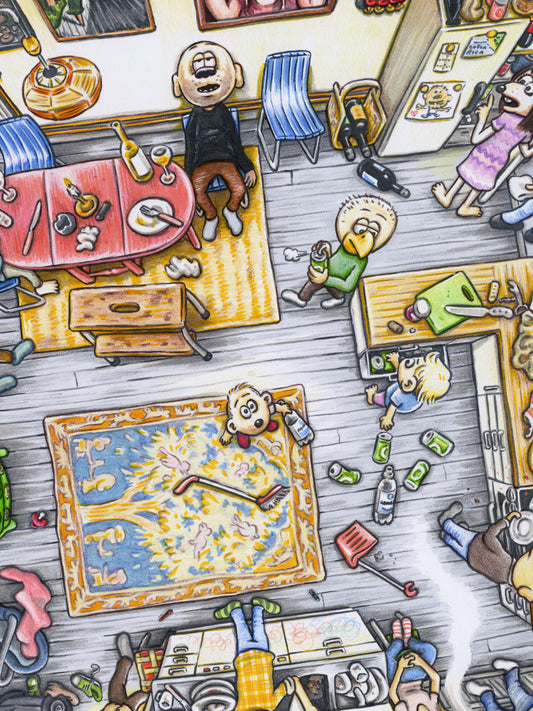
Art Print "Rockys med öl"
Vendor:Martin KellermanRegular price 950 SEKRegular price -
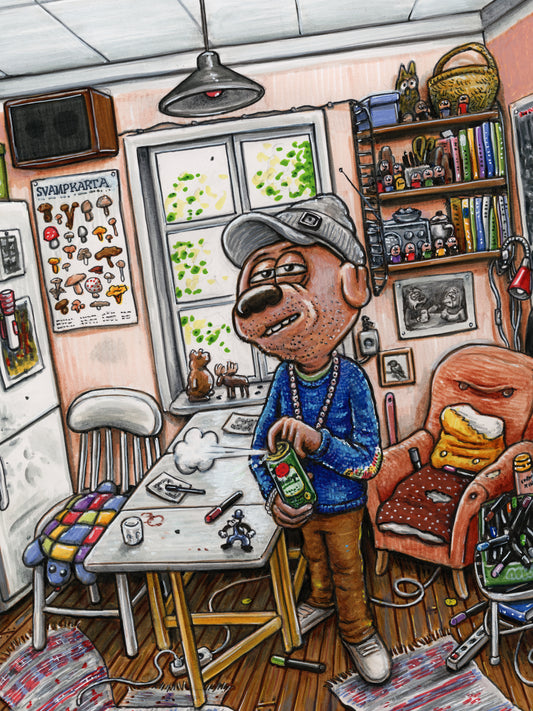
Art Print "Rockys kök"
Vendor:Martin KellermanRegular price 950 SEKRegular price -
Art Print "Torpet"
Vendor:Martin KellermanRegular price 2 500 SEKRegular price -
Scarf “Gäst hos Agge”
Vendor:Martin KellermanRegular price From 1 200 SEKRegular price -
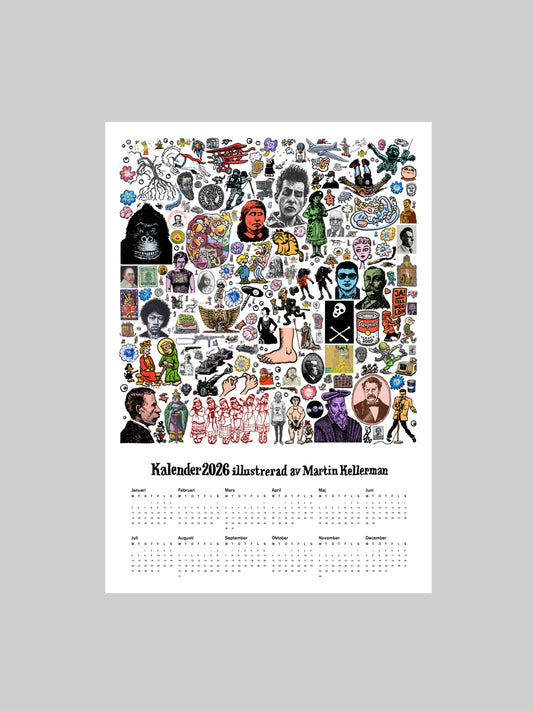
Wall Calendar 2026
Vendor:Martin KellermanRegular price 450 SEKRegular price -
Art Print "Billion Dollar Ideas"
Vendor:Martin KellermanRegular price 950 SEKRegular price -
Tray "Rocky"
Vendor:Martin KellermanRegular price 499 SEKRegular price -
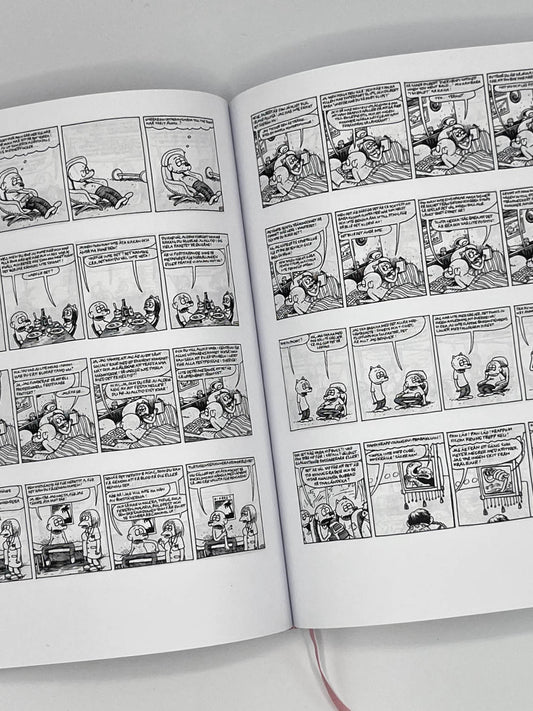
Book "Rocky" (SE)
Vendor:Martin KellermanRegular price 650 SEKRegular price












Martin Kellerman (b. 1973) is a Swedish cartoonist and visual storyteller best known for the long-running comic strip Rocky. His work is rooted in an illustrative style that blends expressive character design with a direct, journal-like approach to narrative. Drawing from both American and Swedish underground traditions, his influences include artists such as Peter Bagge, Robert Crumb, Harvey Pekar, Joe Matt and Max Andersson.
Kellerman developed Rocky during a period of personal transition, using drawing as a way to process everyday experiences and observations. The strip features an anthropomorphic dog character—an alter ego of the artist—whose exaggerated body language, shifting expressions, and dynamic framing form a central part of the visual identity. Through this combination of stylized figures and candid storytelling, the comic explores themes of relationships, work, identity, and urban life.
Although originally created informally, Rocky quickly gained attention for its distinctive visual tone and unapologetically direct voice. Its graphic language incorporates sharp lines, compact compositions, and a rhythm that mirrors conversational pacing. The strip was first published in the free daily newspaper Metro before being carried by several Swedish newspapers, some of which discontinued it due to reader reactions to its explicit humor and frank subject matter.
Kellerman’s work is marked by a close interplay between text and image, where the illustrative choices serve as an extension of the commentary. His contribution to contemporary comics lies in combining diaristic content with a highly recognizable visual style—an approach that has influenced a generation of Nordic cartoonists.
- Choosing a selection results in a full page refresh.
- Opens in a new window.